|
| |
|
| |
|
| |
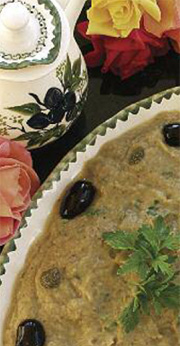 |
Aubergine salad
1 kg aubergines
2 garlic bulbs, pasted
or 1 onion,
grated
salt,
pepper
1 teaspoon oregano
½ cup olive oil
3 tablespoon lemon juice
1 tablespoon vinegar
2 tablespoon nuts
2 tablespoon parsley, finely chopped
Wash the aubergines and grill them wrapped in cooking foil until they get softer. When they are cooler, peel them and take out as many seeds as you can. Put the aubergines in the blender and, while stirring, add the garlic or onion, the lemon, the vinegar and the olive oil. When the mixture becomes creamy, put it into a bowl and mix it with the nuts and the parsley. Decorate with some olives and caper. Optionally, you can also grill 3-4 peppers together with the aubergines, paste and add in the salad. |
|
| |
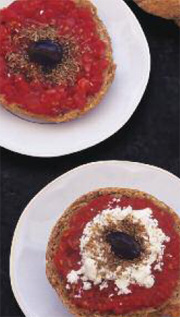 |
Cretan rusk (dakos)
The rusk that is usually used is in round shape and it is made of barley or mixed flour. Dakos is a very famous appetizer in Crete, which recently has become well known in other green regions as well.
1 barley rusk (in round shape)
1 tomato
2 tablespoons olive oil Salt, oregano
3 tablespoons feta cheese or sour myzithra cheese
Slightly soak the rusk and put it on a plate. Grate or chop in small pieces the tomato and put it on top of the rusk. Pour olive oil, salt, oregano and the crumbled feta cheese or myzithra. Serve it as it is or cut into pieces. |
|
| |
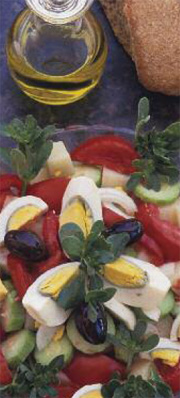 |
Greek salad
2 tomatoes
2 cucumbers some glistrida some parsley
1 pepper, 1 tablespoon caper
5 – 6 black olives
½ teaspoon salt
100 gr feta cheese,
1 teaspoon oregano
4 – 5 tablespoon olive oil
1 tablespoon vinegar
Wash the tomatoes, the cucumber, the parsley, and the glistrida. Cut them into pieces and place the salad ingredients in a large bowl. Add the caper the onion and the olives. Pour salt, olive oil, oregano and vinegar and toss gently. At the end, add the feta cheese. You can also put some pieces of rusk at the bottom of the bowl. |
|
| |
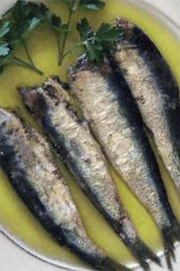 |
Anchovy or sardines in olive oil
1 kg anchovies or sardines
1 tablespoon salt
½ cup lemon juice
1 cup olive oil
2 garlic bulbs
3 tablespoons parsley, finely chopped
Wash the fish, remove the heads and the intestines and place it in a bowl covered with salt and lemon. The anchovy is left in marinate for 10 hours and the sardines for 24 to 30 hours, depending on their size. Try to pull out the tail together with the spine and if the inside is rather white than reddish, then the fish is ready. Cut them into fillets or leave them as they are. Place the fish in a bowl or a glass pot and cover with olive oil. Season with garlic and parsley. The fish is conserved in the refrigerator for several days. |
|
| |
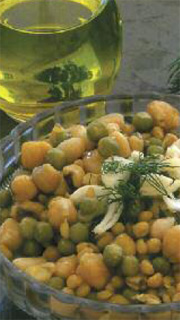 |
Palikaria or polisporia
Palikaria is a traditional dish, that is well – known all around Greece. In the past, Greeks prepared it in special occasions (celebration of Madonna on 21/11 and St. Andrea on 30/11). Farmers believed that with this food, they would increase the productivity of grains. This dish contains a number of pulses. You can either add or remove something, although wheat is necessary.
100 gr wheat
100 gr chickpeas
100 gr peas
100 gr beans
100 gr broad beans
100 gr lentils salt, pepper
To serve:
Onion, dill, olive oil, lemon juice
Soak the pulses from the night before. It’s better to soak each type separately. Boil the wheat together with the chickpeas for half an hour. Add the rest of the pulses and boil until they are cooked. Pour salt and pepper and serve either as a soup or as a salad with olive oil, lemon juice, onion and dill, at will. |
|
| |
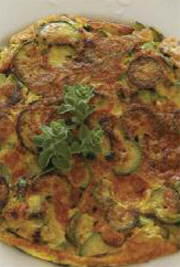 |
Zucchini omelet
1 kg zucchini, sliced
5 – 6 tablespoons olive oil
6 eggs,
½ cup grated cheese,
Salt, pepper
2 tablespoons mint, finely chopped
Fry the zucchini until they are browned and tender. Whip the eggs with the rest of the ingredients and pour over the zucchini. Cook for 2 minutes and turn upside down to brown the omelet from the other side as well. |
|
| |
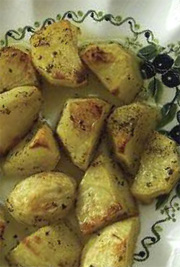 |
Roast potatoes with olive oil and oregano
1,5 kg potatoes
½ cup olive oil Salt,
pepper,
oregano
Lemon juice
Peel off the potatoes, cut them into oblong or round shape and put them in a roasting pan. Season with salt, pepper and oregano; pour the olive oil, the lemon and 1 glass of water. Roast in high temperature at the beginning, and then lower the temperature. |
|
| |
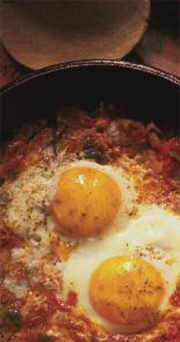 |
Fried eggs with tomato
3 tablespoons olive oil
1 onion, chopped
1 pepper, chopped
2 tomatoes, chopped
Salt, pepper,
2 eggs
Warm some olive oil in the pan and fry the onion and the pepper till they get soft. Add the tomato, salt and pepper and stir gently till the sauce is set. Add the eggs on the tomatoes (sunny side up) and cook for a few minutes, at will. |
|
| |
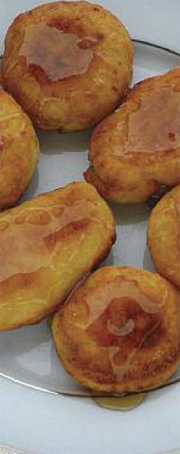 |
Mizithra pies
½ kg mizithra (soft unsalted cheese)
1 egg, 2 tablespoons olive oil
4 tablespoons sugar
1 teaspoon lemon zest or
2 tablespoons mint finely chopped 1 water glass grated rusk or semolina
For the breadcrumb:
2 eggs,
3 tablespoons milk 1 cup flour
1 cup olive oil for frying sugar or honey or molasses and cinnamon for serving
Knead the mizithra with the egg, the olive oil, the sugar, the lemon zest or the mint and the grated rusk. Whip up the egg with the milk. With a spoon, take some filling, make little balls and push gently in the middle to get wider. Dip into the egg mixture, flour, and fry them until both sides turn brown. Sprinkle the pies with sugar and cinnamon or honey/molasses and cinnamon. |
|
| |
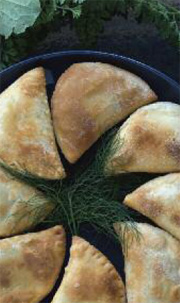 |
Roast pies with herbs
For the pastry:
½ glass of water
½ cup milk or yoghurt
5 tablespoons olive oil
1 teaspoon salt flour (1/2 kg)
For the filling:
1 kg of herds (spinach, seskoula,
kafkalithres,
tsoxous, lapatha etc)
4 tablespoons olive oil
1 onion, finely chopped or 5 fresh onions, finely chopped
1 leek, finely chopped
Some parsley, dill, mint finely chopped
½ cup kefalotiri cheese grated or feta cheese, salt, pepper
Preparation of the pastry: In a large bowl put the flour, make a hole in the middle and pour the olive oil, water, milk or yoghurt and some salt. Knead slowly until you get a tight, floppy dough. Add extra water or flower if necessary. Put aside the dough for an hour to rest. Preparation of the filling: Wash the herbs and finely chop them. Heat some olive oil in a pot and roast the onion and the leek until they soften, add the rest of the herbs, cover the pot and cook it for 2-3 minutes. Add some salt and pepper. When cooler, add some cheese to the mixture. (We can avoid the cheese at will or we can also add an egg). Divide the dough into smaller pieces and roll out pastries 2-3 mm thick. Cut into little round pastries almost at the size of a coffee plate or bigger.Put 1 tablespoon filling in the middle and fold in the middle. Push the edges of the pie to stick together and spread with olive oil or the white of an egg; bake in pre – heated oven for almost half an hour until they are browned. |
|
| |
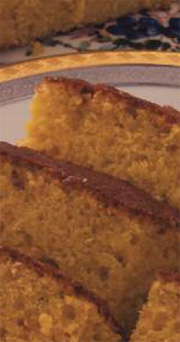 |
Olive oil pie
1 cup olive oil
1,5 cup sugar 6 eggs,
3 vanillas juice and zest of 2 oranges
½ cup milk or yoghurt
½ kg cake flour
Mix the olive oil with the sugar, adding the yolks, the vanilla, the orange juice and orange zest, the milk, the flour and finally the white of the eggs in meringue. Continue mixing gently to integrate the ingredients and pour into a buttered pan No 30. Bake at the medium pre-heated oven for almost 50 minutes. |
|
| |
|
 |
| |
| |
The most olive oil in the world!
Vegetables, fruits, cereals, fish and some meat comprise the daily diet of Cretan people. However, the traditional Cretan diet does not include animal fat or seed oil. It only includes extra virgin olive oil, raw or cooked, which is used exclusively in nutrition. From the beginning till the end of a meal, olive oil is present. According to International Organizations’ data, the average olive oil consumption per person in Crete is 35 liters per year, a multiple quantity comparing to the consumption in other Mediterranean regions. |
| |
| |
| |
Health secret
It is common place that olive oil constitutes a protective shield for our health starting from heart diseases and cancer to diabetes, as well as metabolic and other diseases. The most interesting is that more and more evidence prove that olive oil is an ideal food for human beings. Consuming olive oil, rather than other fats or oils, decreases the LDL cholesterol in blood, without decreasing HDL (non damaging cholesterol). And at the same time it reduces the amount of triglycerides in blood. The concentration of cholesterol and triglycerides in blood may contribute to the obstruction of arteries that transfer oxygen to the brain and heart muscle. In general, olive oil protects from heart diseases, while numerous recent studies show that it reduces systolic and diastolic blood pressure. Other studies prove that consuming olive oil, can decelerate the progress of breast cancer or even other forms of cancer. A balanced diet with olive oil and vegetables can reduce the possibility of cancer up to 75%. |
| |
| |
| |
Biological cultivations
Even though the product that is produced with conventional techniques is free from any form of aggravation, recently more and more producers turn to biological cultivation knowing that this method is as easy as the rest, taking under consideration the environmental and climate conditions of the island. However, the biological Cretan oil constitutes another important step towards the continuous improvement of cultivation conditions and the protection of natural environment. |
| |
| |
| |
| |
| |
|
|
| |
|
| |
After the harvest of the olive from the olive grove, the olive is being transferred to the oil press, from which it goes through several phases, so that the procedure of the receiving of the oil can begin. The beginning of the procedure starts with the passing of the fruit from special cleaning machines for the leaves, and washing.
The cleaning from the leaves is being done by an automatic machine which removes leaves. This step is necessary because a large amount of leaves when it is being grinded with the fruit of the olive it gives olive oil a bitter taste and a large amount of chlorophyll (green color) which does not help in the preservation of its quality.
|
|
| |
|
|
|
|
|
| Cretan nutrition |
 |
| In the international scientific community there has been currently taking place a discussion towards finding the adequate diet ... |
read more  |
|
| Olive ways |
 |
| Nowadays, in the whole glob, there are approximately 800 million olive trees, 95% of which are cultivated in the Mediterranean basin, ... |
| read more |
|
| History of olive oil |
 |
| According to Omiros, the olive oil or the “liquid gold”, during ancient times it was not merely a food, but rather it represented health, strength, ... |
| read more |
|
| Links |
 |
| In this category you can see useful links of companies that produce oil and standardization ... |
| read more |
|
|
|
CRETAN OLIVE OIL © 2011, CHAMBER OF HERAKLION
Koronaiou 9, 71202, Heraklion, Crete, Τ. +30 2810 241034 - F. +30 2810 247043
E-mail: info@cretan-oliveoil.gr Developed by ENTERCITY |
 |
|
|
| |
|